
The Healing Power of Looking: Why Experiencing Visual Art Matters for Your Health
When we talk about "art and health," many people immediately think of art therapy, patients painting their feelings or sculpting clay in clinical settings with trained therapists. But there's another, often overlooked dimension that deserves our attention: the profound health benefits that come simply from experiencing visual art.
Not All Art Engagement Is Art Therapy
Let's clear up an important distinction that often gets muddied in conversations about art and wellness.
Art therapy is a form of psychotherapy. It involves a therapeutic relationship between a qualified, credentialed therapist and an individual. The focus is diagnostic or remedial, with specific clinical goals and interventions. Art therapists undergo years of specialized training to use creative processes within a therapeutic framework.
Experiencing visual arts, on the other hand, is something we do as part of everyday life. When you walk through a museum, browse an online gallery, admire a painting in a doctor's office, or pause to appreciate a sculpture in a park, you're engaging with visual art. No therapist required. No clinical setting necessary. Just you and the art.
This distinction matters because it democratizes wellness. You don't need a diagnosis, a referral, or a copay to benefit from visual art. You just need to look.
What the Science Says
The World Health Organization's landmark 2019 report synthesized evidence from over 3,000 studies on arts and health. The findings on visual arts, even simple receptive engagement like viewing paintings or visiting galleries, were remarkable.
Experiencing visual art has been shown to:
Reduce stress and anxiety: Looking at art activates the brain's reward pathways, similar to looking at something you love. It provides an escape from everyday worries and creates moments of calm in our overstimulated lives.
Support mental wellbeing: For adults experiencing mental health challenges, viewing art in galleries or online provides safe, non-stigmatized spaces for reflection and emotional processing.
Aid cognitive function: For individuals with dementia, visual art engagement helps maintain cognitive abilities and provides valuable sensory stimulation.
Improve immune responses: Research indicates that aesthetic experiences can positively influence our body's stress responses and immune function.
Enhance social connection: Visiting galleries and museums creates opportunities for shared experiences and meaningful conversations, combating the isolation that affects so many people's health.
The Art of Seeing
Here's what makes experiencing visual art particularly powerful: it meets you where you are.
You don't need special skills or training. You don't need to understand art history or be able to explain why a painting moves you. The health benefits come from the act of looking, of allowing yourself to be present with visual stimuli that engage your senses and emotions.
When you stand before a painting, your brain does remarkable work. You process color, composition, and spatial relationships. You make connections to your own experiences and memories. You feel emotions, sometimes ones you didn't know you were carrying. All of this happens whether you're in a world-class museum, or when you have the right art at home, or when your employer avoids plain gray, white, or beige walls matching the company’s logo.
Making It Part of Your Life
The beauty of receptive visual arts engagement is its accessibility. You can:
Take a virtual tour of a museum during your lunch break
Visit a local gallery on a Saturday afternoon
Follow artists and galleries on social media
Notice and appreciate public art during your daily commute
Browse online art collections from museums worldwide (most major museums have digitized their collections)
Create a ritual of viewing one new artwork each week
The WHO report found that the most beneficial experiences happened when people felt safe, unstressed, and free to engage at their own pace. There's no pressure to "get it right,” just to show up and look.
A Prescription for Our Times
In an era of healthcare costs spiraling out of control and mental health crises mounting, visual arts engagement offers something precious: a low-cost, accessible intervention with no negative side effects and proven benefits.
Some evidence even suggests that visual arts engagement may have impacts comparable to, and in some cases stronger than, certain medications and exercise interventions for specific health outcomes. This doesn't mean art replaces medicine, but it does mean we're dramatically underutilizing a powerful tool that's been hiding in plain sight.
Countries like Finland, Norway, and the United Kingdom are already incorporating arts engagement into their public health policies. The question isn't whether experiencing visual art improves health, the evidence is clear. The question is: when will we make it a standard part of how we think about wellness?
An Invitation
The next time you're feeling stressed, anxious, or disconnected, consider this: somewhere, there's a piece of visual art waiting to meet you. It might be in a museum, on a website, or on a wall you pass every day without noticing. You don't need permission. You don't need expertise. You don't need a therapist (though therapy is wonderful for those who need it). You just need to look.
Your health might thank you for it.
This article draws on findings from the World Health Organization's 2019 Health Evidence Network Synthesis Report No. 67, "What is the evidence on the role of the arts in improving health and well-being?" by Daisy Fancourt and Saoirse Finn, which synthesized research from over 3,000 studies on arts and health.
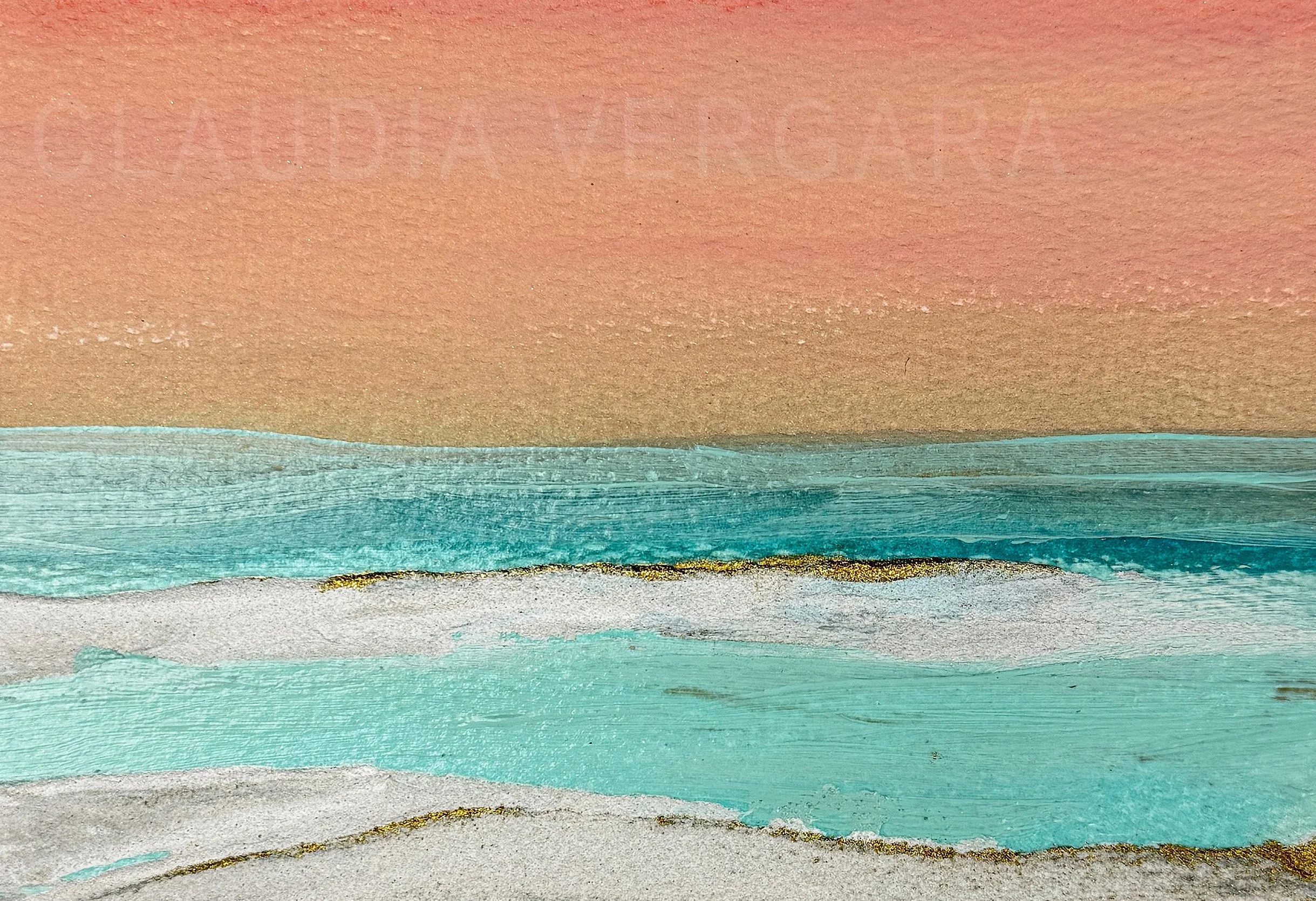
Sandbar Mini by Claudia Vergara
